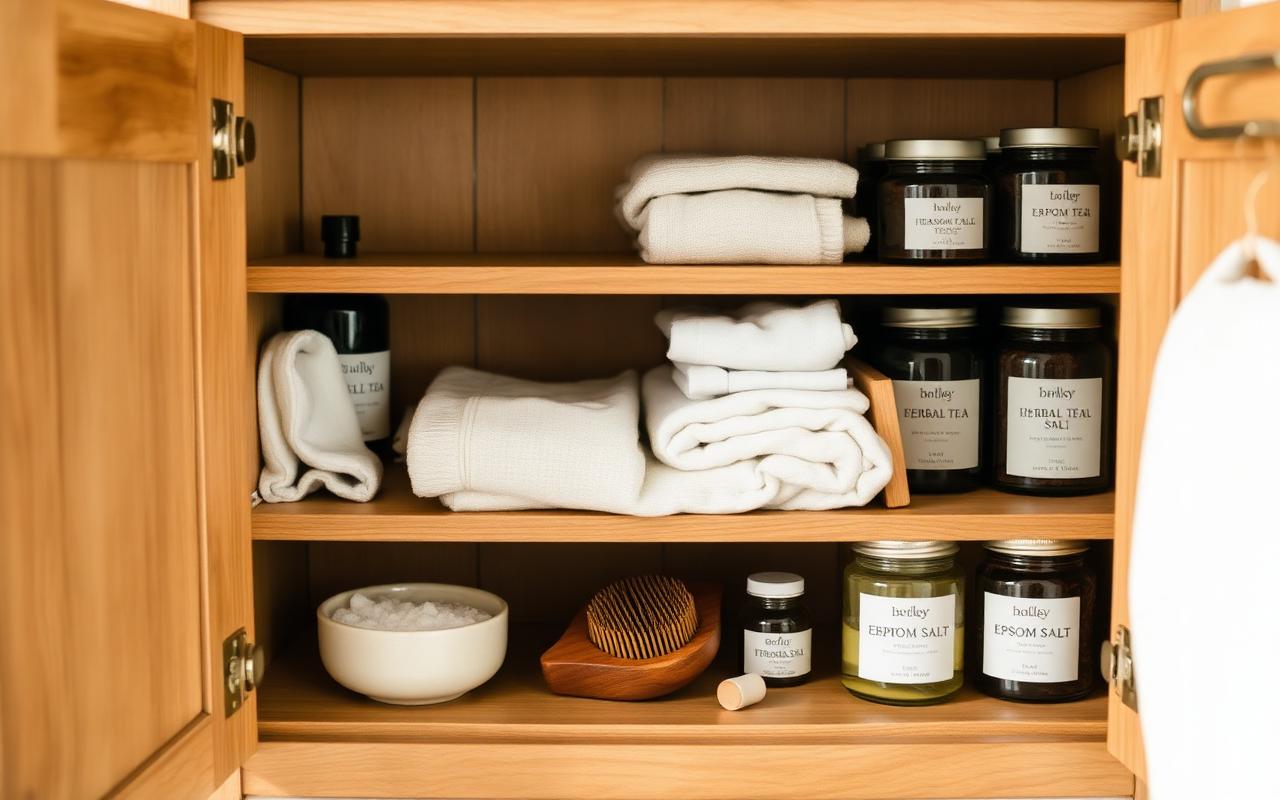
Building a Home Wellness Cabinet
A simple, organized cabinet does more for daily wellness than any cart full of products ever will.
A home wellness cabinet isn't a beauty shelf. It's a small, organized space — a drawer, a basket, a shelf, a cupboard — that holds the everyday supplies your household actually uses to care for itself.
Done well, it brings calm. You know where things are. You know what you have. You know what you're out of. You stop buying things you don't need because you can see what you already own.
Done poorly, it becomes another version of the wellness aisle: full, expensive, mostly forgotten.
Here's how to build one that actually serves you.
Start with what your household actually uses
Before you buy anything, look at what gets used. What do you reach for during a head cold, a long week, a scraped knee, a hard night of sleep? What does your family ask for when they don't feel right?
Make a short list. Most households only really use 15 to 25 items consistently. The rest is clutter.
A simple categorical layout
Keeping the cabinet organized by purpose makes it easier to use, restock, and pass on knowledge to the rest of the household. A few helpful categories:
- Daily basics: thermometer, bandages, gentle antiseptic, basic pain reliever (if used in your home), tweezers, scissors.
- Comfort and recovery: heating pad or hot water bottle, soft compress cloths, a small bottle of unscented lotion.
- Teas and warm drinks: chamomile, peppermint, ginger, lemon balm, a good honey.
- Topical supports: unscented salve, arnica balm (for bruises), a simple muscle rub, magnesium spray or epsom salt.
- Hydration and nourishment: electrolyte option you trust, a few easy-to-digest pantry items for sick days.
- Personal supplements: only what you and your household actually take, clearly labeled, with expiry dates visible.
- Notes and references: a small notebook with allergies, medications, dosages, and any provider contacts.
That last category is small but underrated. A written reference saves a lot of stress when someone isn't feeling well and can't think clearly.
Containers, labels, and a quick sweep
Practical organization doesn't require expensive bins. Whatever you have on hand — small baskets, shallow boxes, mason jars — is fine. The goal is to see things at a glance.
A few quick habits keep it useful:
- Label honestly. Name and purpose. No guessing.
- Check expiry dates twice a year. Spring and fall is enough.
- Restock the day you finish something, not weeks later.
- Keep it out of reach of children, but accessible to everyone else in your home who might need it.
A 15-minute sweep every six months keeps the whole thing functional.
What not to put in your cabinet
A wellness cabinet is not a shrine to every trend. A few things to leave out:
- Products you bought once because of a sale and have never used.
- Anything that promises cures or "miracle" results.
- Old supplements or herbs past their expiry date — they're not gentle, they're stale.
- Open jars of unknown things you can't quite remember.
If you wouldn't recommend it confidently to a family member, it doesn't belong in the cabinet.
A note on shared homes
If you share your home with others, the cabinet is a quiet form of care for them too. Knowing where the bandages are. Knowing which tea helps after a hard day. Knowing where to find the heating pad. These small things become part of how a household looks after itself.
If kids are in the home, talk through what's in there. Wellness education starts young, and a simple, calm explanation of what each item is for builds real knowledge.
Practical takeaways
- Build around what your home actually uses.
- Keep it organized by purpose, not by brand.
- Label, date, and restock.
- Skip anything that promises miracles.
- Treat the cabinet as a quiet form of care for the people you live with.
A note on care
A home wellness cabinet supports everyday comfort and care. It doesn't replace medical attention. For anything serious, persistent, or worrying, contact a qualified healthcare provider.
Continue learning
If you'd like guidance on professional-quality items to consider, the Fullscript Dispensary is one option. Otherwise, the rest of the Learn section can help you think through which categories matter most for your household.
Disclaimer: Your Wellness Broker provides educational information, wellness resources, and curated product access. We do not diagnose, prescribe, or provide medical treatment. Consult a qualified healthcare provider before starting new supplements.